For high performing women who refuse to be overlooked again .
The Unspoken Rules
Companies Use to
Decide Who
Gets Promoted
Whether you're working toward your next promotion or starting fresh in a new company, learn the hidden rules that separate high performers from future leaders.
Get instant access to the corporate promotion rules nobody hands you with the offer letter—for just $7.

“Now that I have the inside scoop, I realise that I have seen people do some of these tips and it working.”
I didn't realise it was strategy this whole time. I kinda feel cheated haha I didn't know the rules of the game, the frustration made me resign. I outworked everyone in the team including my direct superior but I got paid for carrying the team in thank yous and non financial appreciation.
Does this sound like you?
This Mini Course Is for You If…
You know you’re capable of more, but you also know hard work alone hasn’t been enough to create the career momentum you want.
You’ve been performing at a high level, but your career growth hasn’t matched the quality of your work.
You’ve recently started a new role and want to build the reputation of a future leader from the beginning.
You’re tired of hoping your hard work will eventually speak for itself.
You know relationships and visibility matter, but you don’t want to play office politics or become someone you’re not.
Whether you’re trying to change how you’re seen in your current company or establish yourself differently in a new one, the same unspoken rules apply.
You tell yourself this time will be different.
Maybe this is the year you finally get promoted. Maybe you’ve started a new job determined not to repeat the past.
Either way, most women make the same mistake.
They change their circumstances... without changing how they’re perceived.
And that’s why the same promotion pattern keeps showing up.
“This year I’ll work even harder.”
“I’ll prove myself faster.”
“I’ll become indispensable.”
“Surely they’ll see my potential this time.”
It feels like the right strategy because it’s the strategy that has always worked before.
Work harder. Deliver more. Say yes. Be reliable. Become the person everyone depends on.
But here’s the problem.
That is exactly what thousands of other high-performing women are doing too.

The women who get promoted aren’t always the ones doing the best work.
They’re the ones who understand how promotion decisions are actually made. Because once you reach a certain level, companies stop asking one question and start asking another.
“Who’s doing the best job?”
“Who looks ready to lead?”
Those are two completely different questions—and they produce two completely different outcomes.
That’s why changing companies doesn’t automatically change your career.
A new boss won’t change it. A new team won’t change it. Another year of exceptional performance won’t change it either.
The problem was never your capability.
It was that nobody taught you the system behind promotion decisions.
Inside The Unspoken Rules, you’ll learn how companies really identify future leaders—so you can intentionally build the reputation that gets you noticed, trusted and promoted, whether you’re moving up where you are or starting fresh somewhere new.
What Changes










The Unspoken Rules Behind Corporate Promotions
Whether you're working toward your next promotion or starting fresh in a new company, this framework will help you build the reputation that gets you noticed, trusted and promoted.
👍 Unlock the Unspoken Rules for just $7The cost of repeating the pattern is higher than you think
Most people assume a new company or a new role automatically breaks the cycle. It doesn’t. A new building doesn’t change what you were never actually shown how to do.
Every year you operate without understanding how positioning works is a year you absorb that cost.
Three years without it: $100,000+ in salary alone.
- Bonus differential typically jumps from 5–15% of salary to 20–50% at the senior level
- Retirement contributions calculated on a lower base
- Stock or equity that compounds over time
even with conservative numbers
The people whose names come up first are high on both axes
Soon
Bet
Here’s what your senior leaders are looking at, whether or not you’ve ever seen it.
The people whose names come up first aren’t just high performers. They’re high on both axes.
You can be the strongest performer in the room and still be invisible on the side that actually gets you chosen.
I know this because I sat on both sides of the table
Promoted every few years, chosen for opportunities, not just applying
Built and led global teams, launched major initiatives
Advocated for by leaders 2–3 levels above
Obsessed with getting women promoted and paid more
Call Center Rep → Business Analyst → Senior Analyst → Consultant → Senior Consultant → Director → AVP → VP
I applied for one role in my entire corporate career. The first one.
Every role after that, I was tapped. Put forward before the job description existed.
Years later, when I inherited the succession planning documents, the 9-box grids, I saw exactly why. For five to seven consecutive years, I was marked High Performance, High Potential.
My promotions weren't driven by my last performance review. They were driven by how I had been positioned in the minds of people two levels above me, long before any role opened, in every company I walked into.
Most women are never shown how to do that intentionally. So they start over somewhere new, hoping the fresh start is the fix, and the same invisible problem follows them in.
That's what this course is.



Here’s what you’ll learn inside
The Unspoken Rules Mini Course.
The promotion rules that help you become visible, memorable, and chosen in your new chapter.
Get Instant Access — $7 · Watch it in a daySEE why strong performance was never the problem and what actually differentiates candidates in the room.
BUILD visibility across multiple leaders in a place where almost nobody knows your track record yet.
SHIFT into the thinking that signals executive readiness now, not three years from now.
NAVIGATE how power actually moves in corporate environments without compromising who you are.
POSITION your name so it comes up in rooms you’re not even in yet.
This is not leadership development repackaged.
It’s the promotion rules from a former Fortune 500 executive.
And it means this chapter doesn’t have to end the way the last one did.
The three moves that
change everything.
Understand how the decision actually gets made
Most people believe promotions are decided during performance reviews. They’re not. They happen in leadership meetings and quiet conversations where someone asks: “Is she ready for more?”
Send the signals that matter
You don’t need longer hours. You don’t need to change your personality. You do need to operate in a way that signals: she’s already thinking at the next level.
Become the name that comes up before the role exists
High-potential candidates are discussed long before roles are posted. That conversation about you is already starting now.
Before You Understand The Rules
You start over and tell yourself this time will be different.
You work twice as hard to prove you belong, the same way you did before.
The same invisible problem shows up right on schedule, and you get blindsided again.
You wonder if it's just you, or if the system was rigged against you all along.
After You
Understand The Rules
You're visible to the people who make decisions, not just the ones who witness your work.
You know how you're being evaluated in this new chapter, and you're shaping it from the start.
Your name comes up before the next role exists.
You stop repeating the pattern and start
building something that compounds instead of resetting.
“I just started. I don’t want to get ahead of myself.”
This isn’t about rushing the role. It’s about not repeating a pattern you’ve already lived once. The women who get positioned early aren’t moving faster; they’re just not waiting to start.
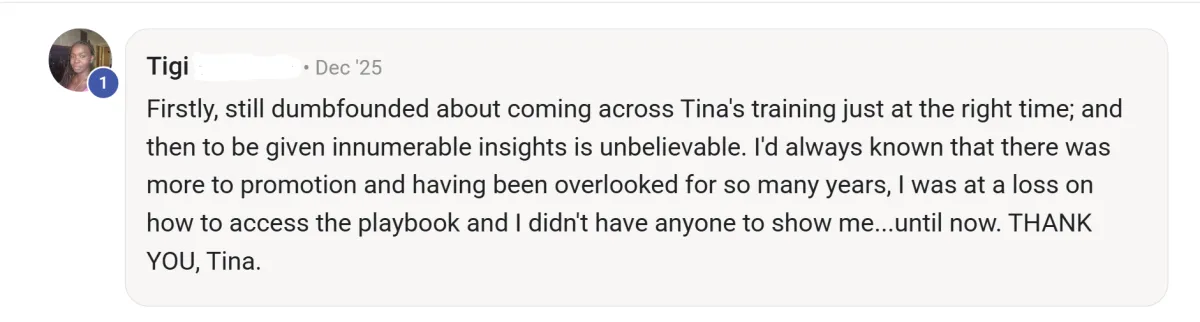
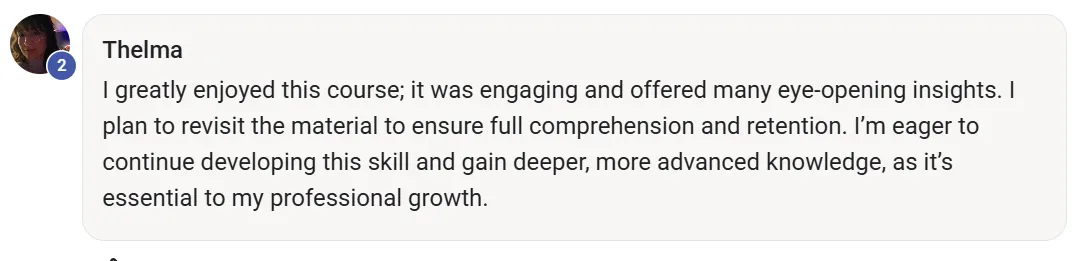
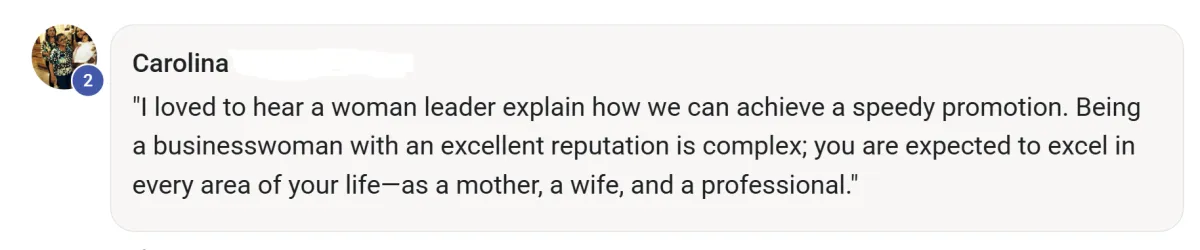
“I believe this course is “pure gold”: insightful and practícal. I feel inspired and empowered to follow all the tools & tips . Thank you !.”
I think these are 4 great lessons in the course - and definitely liked the incentive of completing it within the time period, it helped keep my motivation going, since a number of the skills are not ones that come easy to me. I'm going to go over the lessons again, to take more notes so I can structure a game plan for myself.”
“My last company was the problem. This one will be different.”
Maybe. But the thing that actually held you back wasn’t the company. It was not knowing the second half of how promotions get decided. That doesn’t change with the address.
“It’s only $7. Is this actually going to help?”
The price is low on purpose. It’s the same rules I teach inside a $2,500 coaching program, distilled into one sitting, so there’s nothing standing between you and understanding the actual system.
“Great insights and very timely for me. Very appreciative of Tina wanting to empower and raise women by providing this opportunity and insights into the inner workings of corporation and leadership that many may never get access to otherwise.”
“I don't know how I landed here, but I'm so glad I did. There is so much fluff and useless content out there, but this is real and specific. It's exactly what it is proposed to be...not how to work harder, but how to be seen. It sounds superficial when I say it like that, but it is critical. Being the storyteller instead of character.”
“I don’t want to seem like I’m trying too hard, too soon.”
None of this is about self-promotion or trying harder. It’s about understanding how visibility already works, quietly, in rooms you’re not in yet. You can do this without changing who you are.
You have two options
from here.
Keep hoping this time will be different.
Learn how the system actually works
FAQ's
How is this different from onboarding or traditional leadership training?
Onboarding teaches you the job. This teaches you how the people above you decide who's ready for the next one, the part that got skipped last time too. If you've ever done everything right somewhere and still got passed over, this fills in exactly what was missing.
Will this work if I'm starting somewhere new and don't have a track record here yet?
Yes, this is actually the best time to start. The signals that get you positioned for what's next have very little to do with tenure. If you wait until you've built a long history in the new role, you're just giving the old pattern more time to repeat before you catch it.
What if I don't manage a large team yet?
This isn't about team size. It's about how you're positioned in the minds of the people who decide who's ready, which starts well before you're managing anyone at all.
How quickly can I expect to see results?
You can binge the course in one 2 hour sitting. Most women tell me the shift starts the moment they understand the 9-box grid, because they finally see the system behind the promotions and my signature framework to work that system.
Watch it in a day.
Then step into this new chapter knowing exactly what to do and why; instead of finding out the hard way again.
Get Started for Just $7Copyrights 2026 | Tina Joseph Coaching | Privacy Policy | Terms & Conditions